Why the Niagara boats stop every winter, and the steel chain that decides when
A boom strung across the outlet of Lake Erie every December is what governs the tour boat season. How it works, why the boats cannot run through ice, and what opens instead.
 By Michael Thompson, Niagara Falls boat tour specialist and local guide
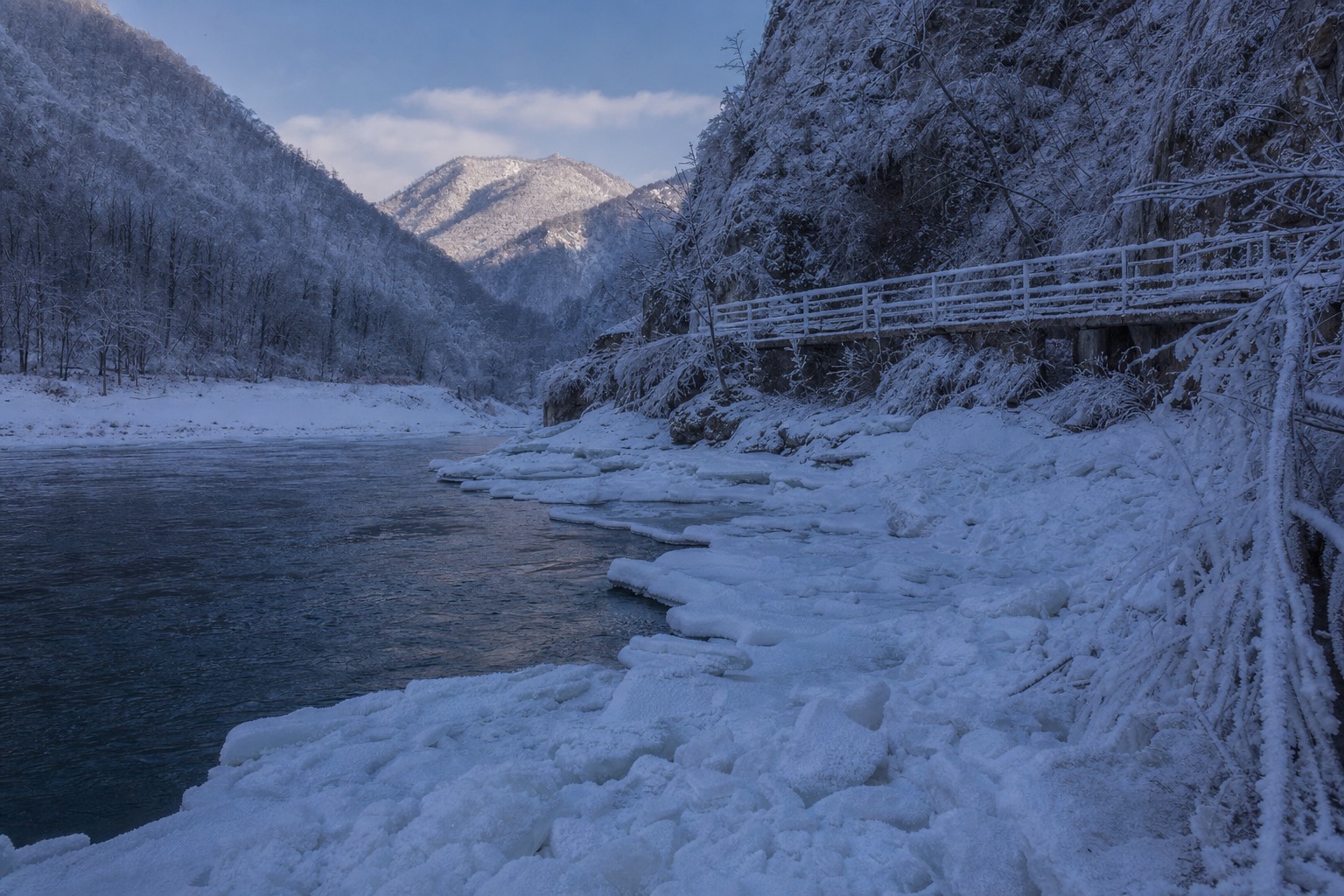
The Niagara tourist calendar is decided every winter by a piece of infrastructure that almost no visitor has heard of, sitting about thirty kilometres upstream of the falls, in a lake.
Plan around the itinerary for your actual date. A tour can operate with land attractions even when its seasonal boat is replaced.
Booking choice. Journey Behind the Falls, Skylon Tower and a seasonal Niagara City Cruises ride in one walking itinerary. Explore Canadian walking tour: boat, Journey & Skylon
The ice boom
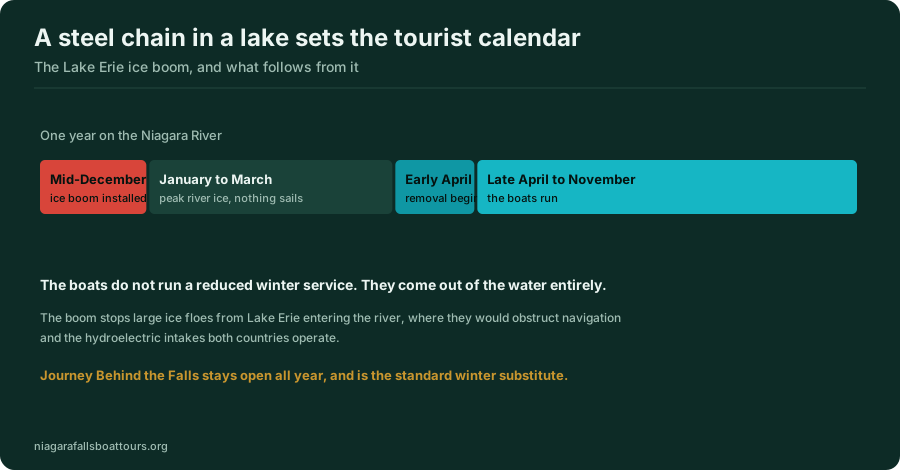
Each year around mid-December, a chain of floating steel pontoons is strung across the outlet of Lake Erie where it feeds the Niagara River. It is not a dam and it does not stop water. It stops ice, specifically the large floes that form on the lake and would otherwise be flushed downriver in bulk.
Without it, the river chokes. Ice jams damage shoreline structures, obstruct the hydroelectric intakes that both countries operate on this river, and make navigation impossible.
Its removal each spring is what releases the tourist season. The International Joint Commission announced removal beginning on 6 April in 2026, and the American boat opened on 24 April, a little under three weeks later. That lag is consistent, which is why the season dates shift slightly each year rather than being fixed to a calendar.
| Stage | Roughly when | What it means for boats |
|---|---|---|
| Ice boom installed | Mid-December | The season is already over |
| Peak river ice | January and February | Nothing runs on the water |
| Ice breaking up | March | Still nothing |
| Boom removal begins | Early April | The clock starts |
| First sailings | Late April to early May | Season opens |
| Full operation | May to October | Both boats, both sides |
| Season closing | November | American boat first, Canadian later |
Why not just run a reduced service?
Because it is not a question of comfort or demand. The vessels come out of the water entirely. Running a boat through ice in a gorge with the current Niagara carries is not a marginal decision that operators make cautiously; it is not an option.
That distinction matters for planning. Plenty of seasonal attractions run a reduced winter schedule and the honest advice is to check the weather. Here there is nothing to check. Between December and April no booking of any kind can put you on a boat at Niagara Falls.
What the falls look like instead
Better than their reputation, is the honest answer. The spray freezes on everything within reach of it, so the trees, railings and lamp posts along the gorge accumulate a thick rime that has to be seen rather than described. Ice mounds build at the base of the falls. The crowds effectively vanish.
The falls themselves do not freeze, which is the myth that circulates every January. The volume of water going over is far too great, roughly 2,400 cubic metres a second. What freezes is the edges, the spray and the surface of the ice bridge that sometimes forms below.
| Winter at Niagara | Status |
|---|---|
| The boats | Docked, both sides |
| Cave of the Winds | Closed; the walkways are dismantled each autumn |
| Journey Behind the Falls | Open, year-round |
| The illumination | Every night, year-round |
| Winter Festival of Lights | Runs through the cold months |
| The promenade | Open, and nearly empty |
| Hotel rates | The lowest of the year |
That table is the argument for the Canadian bank in winter. Ontario keeps its close-contact attraction open all year; New York loses both of its headline experiences at once. Our season guide has the dates and our best month guide goes month by month.
What honest winter listings do
They substitute. A tour that carries the boat between May and October swaps in Journey Behind the Falls for the closed months, because that is the year-round Canadian attraction and it is a genuinely fair replacement: you are still going behind the water rather than only looking at it.
What separates a good listing from a bad one is whether it says so before you pay. The both-sides day tour states the substitution plainly and holds 4.9 across 9,589 Viator reviews, which is the strongest social proof of anything on either platform for this destination.
The listings to be wary of are the ones carrying "boat" in the title year-round with the substitution buried, because the title is what people search for. If you are booking between November and April, read the inclusions line rather than the product name.
What each side loses when the boats stop
The closed season does not hit the two banks equally, and that asymmetry should decide where a winter visitor spends their time.
| Attraction | Side | Winter status |
|---|---|---|
| Maid of the Mist | New York | Closed |
| Cave of the Winds | New York | Closed, walkways dismantled |
| Observation Tower | New York | Open |
| Niagara City Cruises | Ontario | Closed |
| Journey Behind the Falls | Ontario | Open, year-round |
| Table Rock and the promenade | Ontario | Open |
| Nightly illumination | Both, viewed from Ontario | Every night |
| Skylon Tower | Ontario | Open |
New York loses both of its close-contact experiences at once. Ontario loses one of two. That is the whole argument for spending a January trip on the Canadian bank, and it is a stronger argument than the view, which is only a preference.
A small piece of upstream history
The river has form for putting objects in awkward places. In August 1918 a dumping scow broke loose and grounded about 600 metres above the crestline, where it stayed for 101 years before shifting in 2019, as Niagara Parks records. It is a useful reminder of what the upper river does with anything that gets into it, and of why the ice boom exists at all. Our post on whether a boat has ever gone over the falls has the rest of that story.
Winter questions
Why do the Niagara Falls boats stop in winter?
Ice on the Niagara River. Neither operator can navigate the gorge or run a landing through it, so the vessels come out of the water entirely rather than running a reduced schedule.
What is the Niagara ice boom?
A chain of floating steel pontoons strung across the outlet of Lake Erie each December to stop large ice floes entering the Niagara River. It protects shoreline structures and the hydroelectric intakes, and its removal each spring is what sets the boat season.
Do Niagara Falls freeze?
Not the falls themselves; the volume of water is far too great. What freezes is the spray, the edges and the surface of the ice that builds at the base, which produces the dramatic winter photographs people mistake for a frozen waterfall.
Can you do anything at the falls in winter?
Yes, on the Canadian side. Journey Behind the Falls runs year-round, the illumination is every night, and the Winter Festival of Lights runs through the cold months. The American side loses both the boat and Cave of the Winds at once.
What happens if you book a boat tour in January?
An honest listing substitutes Journey Behind the Falls, which is a fair replacement. A less honest one leaves the boat in the title and buries the substitution. Read the inclusions rather than the product name for any booking between November and April.
Choose your Niagara day
General editorial starting point; confirm dates, route and personal requirements.
Canadian walking tour: boat, Journey & Skylon
Have a travel date in mind? Check this itinerary before arranging separate admissions. Journey Behind the Falls, Skylon Tower and a seasonal Niagara City Cruises ride in one walking itinerary.
About 3 hours 15 minutes plus check-in. Choose the Niagara Falls, Canada walking option. Meet inside Skylon Tower, 5200 Robinson Street, at the See Sight check-in. English. Guided portion ends at boat boarding; no return transfer. Winter boat replacement is Niagara Takes Flight, which excludes infants and children under 100 cm. Confirm exact seasonal itinerary and access needs.
Choose a date to see Viator scheduled departures. Final availability and price are confirmed on Viator.
Choose only the details that matter. Unanswered fields keep this general guidance; a choice can rule out a package.
| Canadian walking tour: boat, Journey & Skylon | Journey Behind the Falls, Skylon Tower and a seasonal Niagara City Cruises ride in one walking itinerary. About 3 hours 15 minutes plus check-in. Choose the Niagara Falls, Canada walking option. Meet inside Skylon Tower, 5200 Robinson Street, at the See Sight check-in. English. Guided portion ends at boat boarding; no return transfer. Winter boat replacement is Niagara Takes Flight, which excludes infants and children under 100 cm. Confirm exact seasonal itinerary and access needs. |
|---|---|
| USA boat, Cave & hotel pickup | Maid of the Mist, Cave of the Winds and the Observation Tower in one guided American-side itinerary. About 4 hours, plus pickup up to an hour before. Pickup in Niagara Falls, NY, not Buffalo or NYC. English; shared tour. Boat and Cave operations are seasonal; winter substitutes differ. Food is extra. Confirm access needs with the operator. |
| Both sides with boat, Cave & Skylon | American-side boat and Cave stops plus Skylon Tower views in Canada. About 6 hours, plus pickup and border delays; reserve a full day. Niagara Falls ON/NY hotel pickup. English; shared tour. Appropriate entry documents for both countries required. Reconfirm with Over the Falls at least 24 hours ahead. Vehicles cannot accommodate occupied wheelchairs; assisted transfer and collapsible chairs need advance arrangement. Seasonal substitutions; food extra. |
Compare your own group totals
Use the same currency and the same party. Include admissions, transport, parking and taxes in the DIY total. Quotes are your inputs, not prices supplied here.
Enter both totals to compare the cost of the guided itinerary with your independent plan.