What is the best month to visit Niagara Falls in 2026-2027?
The falls are the same every month. Everything around them is not.
 Written with Michael Thompson, Niagara Falls boat tour specialist and local guide
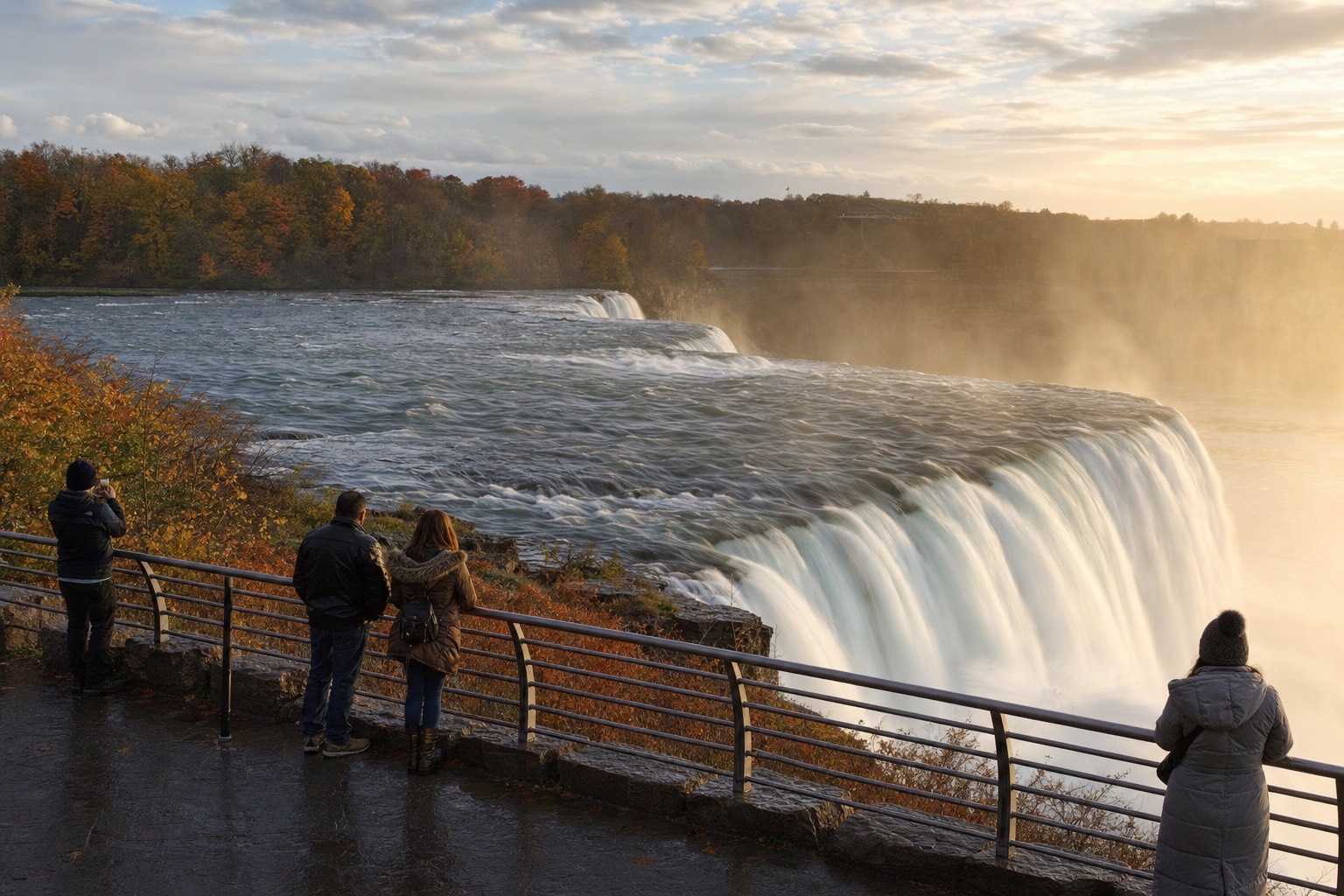
Short answer
September and early October are the best months: the boats are running, the weather is still warm, and the July crowds have gone. May is the close second. July and August have the worst queues of the year, and December through March the boats do not run at all.
There is no bad month to see Niagara Falls, which is a genuinely unhelpful thing to be told when you are choosing flights. There are certainly better and worse months to ride a boat at Niagara Falls, and those are different questions with different answers.
Plan around the itinerary for your actual date. A tour can operate with land attractions even when its seasonal boat is replaced.
Booking choice. Journey Behind the Falls, Skylon Tower and a seasonal Niagara City Cruises ride in one walking itinerary. Explore Canadian walking tour: boat, Journey & Skylon
What is the best month to go to Niagara Falls?
September, followed closely by May and early October. Both boats are running, daytime temperatures are still comfortable enough to enjoy being soaked, and the queues are a fraction of the July and August peak. The falls themselves look identical in every month.
The reason September wins is that it sits on the right side of two curves at once. School holidays across the United States and Ontario have ended, so the crowd volume drops sharply, but the boats have another two months of operation left. May does the same trick from the other direction, with the added advantage that the spring melt puts a lot of water over the crestline.
| Month | Boats | Crowds | Weather | Verdict |
|---|---|---|---|---|
| January | Closed | Lowest | Cold, ice mounds at the base | Beautiful, no boat |
| February | Closed | Low | Coldest, heaviest ice | The best winter month, no boat |
| March | Closed | Low | Thawing, grey | The weakest month overall |
| April | From the 24th | Building | Variable, often wet | Late April works |
| May | Both running | Moderate | Mild, high water | Excellent value |
| June | Both running | Rising sharply | Warm | Good, book early sailings |
| July | Both running | Peak | Hot | Worst queues of the year |
| August | Both running | Peak | Hot, humid | Worst queues of the year |
| September | Both running | Falling | Warm, settled | The best month |
| October | Both running | Quiet | Cool, best light | Excellent, especially early |
| November | Closing through the month | Low | Cold, grey | Check dates carefully |
| December | Closed | Moderate, festival crowds | Cold | Festival of Lights, no boat |
When are the boats actually running?
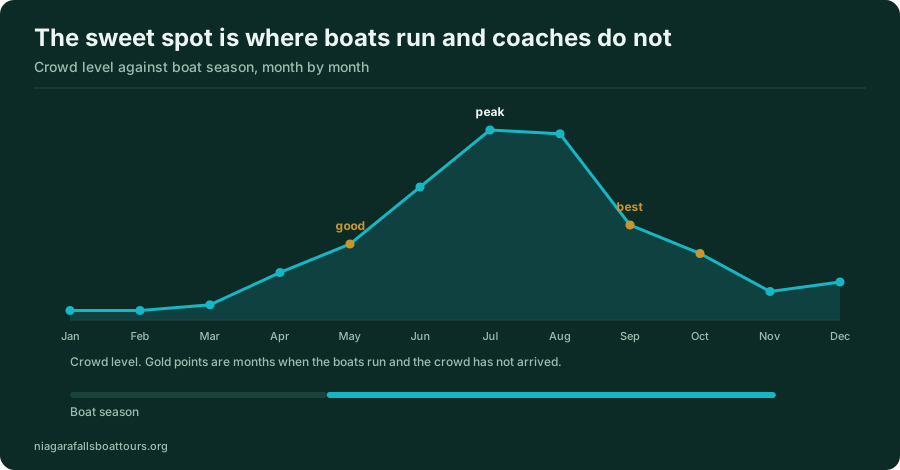
Maid of the Mist runs 24 April to 8 November in 2026 and Niagara City Cruises from 1 May into late November. That is the constraint that overrides every other consideration, because no month is the best month if the thing you came for is docked.
The boats come out of the water for the winter because of river ice, and the timing is governed by the Lake Erie ice boom rather than by demand. Our season guide explains the mechanism and gives the exact 2026 dates for both operators, including which attractions stay open when the boats do not.
If your dates are fixed and they fall outside the season, stop optimising for the boat and optimise for the Canadian side instead. Journey Behind the Falls runs year-round, and a February visit to Ontario is a genuinely good trip.
Which month has the fewest crowds?
February, by a wide margin, though the boats are not running. Within the boat season the quietest months are early May and October, when queues are short enough that you can turn up mid-morning rather than at opening.
Crowd volume at Niagara is driven almost entirely by school calendars and coach tours, not by weather. That is why the shoulder months are so much better than their temperature suggests: an October Tuesday can be warm, dry and almost empty at the same time.
| If you want | Go in | Trade-off |
|---|---|---|
| Fewest people, boats running | Early May or October | Cooler water spray, shorter days |
| Best light for photographs | October | Low sun, autumn colour in the gorge |
| Highest water volume | May and June | Busier than October |
| Warmest for getting soaked | July and August | The worst queues of the year |
| Falls at their most dramatic | January and February | No boat at all |
| Illumination and fireworks | Summer evenings | Peak daytime crowds |
Niagara draws over twenty million visitors a year across both sides, and they are not spread evenly. Concentrating a large share of that into ten summer weeks is what produces the hour-long midday queues that dominate the complaints. Our queue guide covers the fixes that work regardless of month.
Is winter at Niagara Falls worth it without the boat?
Yes, as a different trip rather than a compromised one. The falls partly ice over at the edges, spray freezes on every railing and tree, and the crowds thin to almost nothing. What you lose is the boat and, on the American side, Cave of the Winds as well.
The thing nobody tells winter visitors is that the American side loses both of its headline experiences at once, because the Cave of the Winds walkways are seasonal timber structures rebuilt each spring. That makes Ontario the obvious bank for a cold-weather visit: Journey Behind the Falls is open, the promenade faces the Horseshoe crestline head-on, and the nightly illumination is at its best against snow.
If you are visiting in the closed months and still want a structured day, the both-sides day tour substitutes Journey Behind the Falls for the cruise rather than pretending the boats are sailing, and it holds 4.9 across 9,589 Viator reviews.
What does each month actually feel like on the water?
Spray temperature is the variable nobody plans for. A soaking in August is refreshing, a soaking in late October is a decision, and a soaking in early May with wind on the gorge is genuinely cold. The ride is the same length in every month.
| Month on the boat | Air, roughly | What the soaking feels like | What to wear |
|---|---|---|---|
| Late April | Cold | Bracing; the wind off the gorge does the damage | A warm layer under the poncho |
| May | Mild | Cool but fine; high water means heavier spray | Long sleeves |
| June | Warm | Pleasant | Anything, plus a phone pouch |
| July | Hot | The best month for actually enjoying getting wet | Quick-dry, expect to stay damp |
| August | Hot and humid | Welcome relief from the queue | Quick-dry |
| September | Warm | Comfortable, the best all-round month | Light layer |
| October | Cool | Noticeably cold by late month | A dry layer waiting on shore |
| Early November | Cold | Short, sharp and unpleasant if underdressed | Proper coat under the poncho |
That last column is the practical takeaway of this entire guide. Shoulder-season visitors book for the short queues and then underdress, because the temperature on the promenade tells you nothing about the temperature inside a cloud of spray. Our what to wear guide covers it properly, and Niagara Falls Tourism sets out what the Canadian operator provides.
What about the cheapest month?
Hotel rates on both sides fall hard outside the summer, and January to March are the cheapest weeks of the year in Niagara Falls, Ontario in particular. That is a real saving, and it is a saving on a trip without a boat. The genuinely economical version is a shoulder-season visit: May and October give you most of the low-season room rate with the full attraction set open. Our cost guide covers the fares, which do not change by month on either boat.
The month-by-month scorecard
If you only read one table on this page: May and September win, June and October are honourable mentions, July and August are for people whose school calendar decides for them, and December to March is a different holiday that happens to share an address.
Scores are our synthesis of the operators' published season dates, the visitation pattern (June through August is the documented peak), and what recent visitors consistently report; the "book by" column reflects how far ahead the popular slots go in each period.
| Month | Boats | Crowds | On-the-water feel | Verdict | Book the boat |
|---|---|---|---|---|---|
| January | None | Lowest of the year | No water access; frozen mist on the rim | Winter trip, own merits | n/a |
| February | None | Lowest | Ice mounds at their biggest | The photographer's winter pick | n/a |
| March | None | Low | Thaw beginning, grey gorge | The awkward month | n/a |
| April | US boat from the 24th | Low | Big meltwater, cold spray | For the crowd-averse who pack layers | Days ahead is fine |
| May | Both from the 1st | Building | High water, fresh mornings | Best all-round month | A week ahead |
| June | Both | High and rising | Long evenings, warm | The best of peak | Weeks ahead for weekends |
| July | Both | Peak | Hot plaza, perfect spray | The queue is the weather | Weeks ahead |
| August | Both | Peak | As July, warmer water | Same deal as July | Weeks ahead |
| September | Both | Falling fast | Warm water, golden light | Best shoulder month | A week ahead |
| October | Both | Low midweek | Low sun, moody gorge | The connoisseur's pick | Days ahead |
| November | Canada only after the 8th | Very low | Cold, wind risk | One-boat month, Ontario | Days ahead |
| December | None | Festival-of-Lights evenings | Illumination over ice | Winter trip again | n/a |
Two honest footnotes to the scorecard. The "book by" column is about the popular sailings and the guided tours, not the boats selling out wholesale; a Tuesday-morning walk-up in May will essentially always ride. And the July-August verdict is not a warning against going, it is a warning against going unprepared: peak months with the queue playbook applied are perfectly good months.
The shoulder months, examined properly
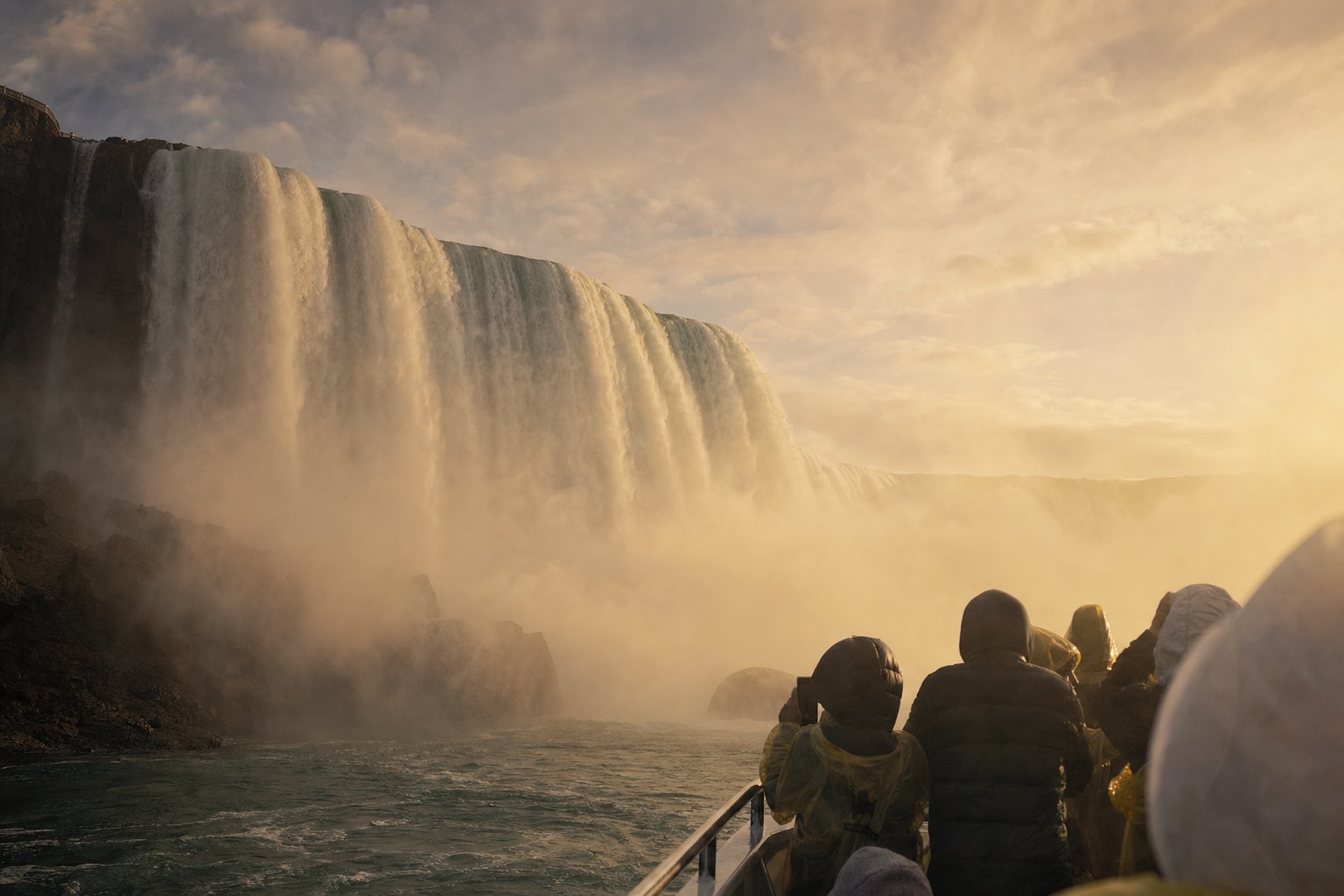
May and September are not compromises; on this particular attraction they are simply better. The mechanism is that the falls do not have an off-season, only the queues do, and the shoulder months keep the first while shedding the second.
It is worth being precise about why this works at Niagara when the same advice is merely conventional elsewhere. Most attractions trade quality for quiet in the shoulder: the beach is colder, the alpine trail is muddy, the resort is half shut. The falls trade nothing. The water over the Horseshoe in mid-May is at its meltwater maximum, roughly the 2,400 cubic metres a second Niagara Parks publishes and then some, while the plaza that will hold an hour of July visitors holds minutes of May ones. The product improves as the audience thins.
| Mid-May weekday | Mid-September weekday | |
|---|---|---|
| The water | Meltwater peak, biggest spray | Settled flow, warmest spray of the year |
| First sailing | Walk on | Walk on |
| Midday ride | Short queue, workable | Short queue, workable |
| On deck | Fresh; a layer under the poncho | Mild; the soaking is almost pleasant |
| Light for photographs | Long evenings beginning | Golden hours, low sun up the gorge |
| The paired attractions | All open | All open |
| Evening | Illumination in a light jacket | Illumination in a jumper |
September nudges ahead for most people because the water has spent a summer warming and the light is doing something the postcards never capture, low and warm across the spray column. May nudges ahead for spectacle, because the river is simply carrying more. There is no wrong answer between them, and either one converts every other guide on this site from damage control into a bonus: the queue tactics become optional, the timing math relaxes, and the worth-it question answers itself from the first minute in the basin. If your dates are free, book one of these two months and the tour that does both sides while the good slots are open.
How far ahead should each month be booked?
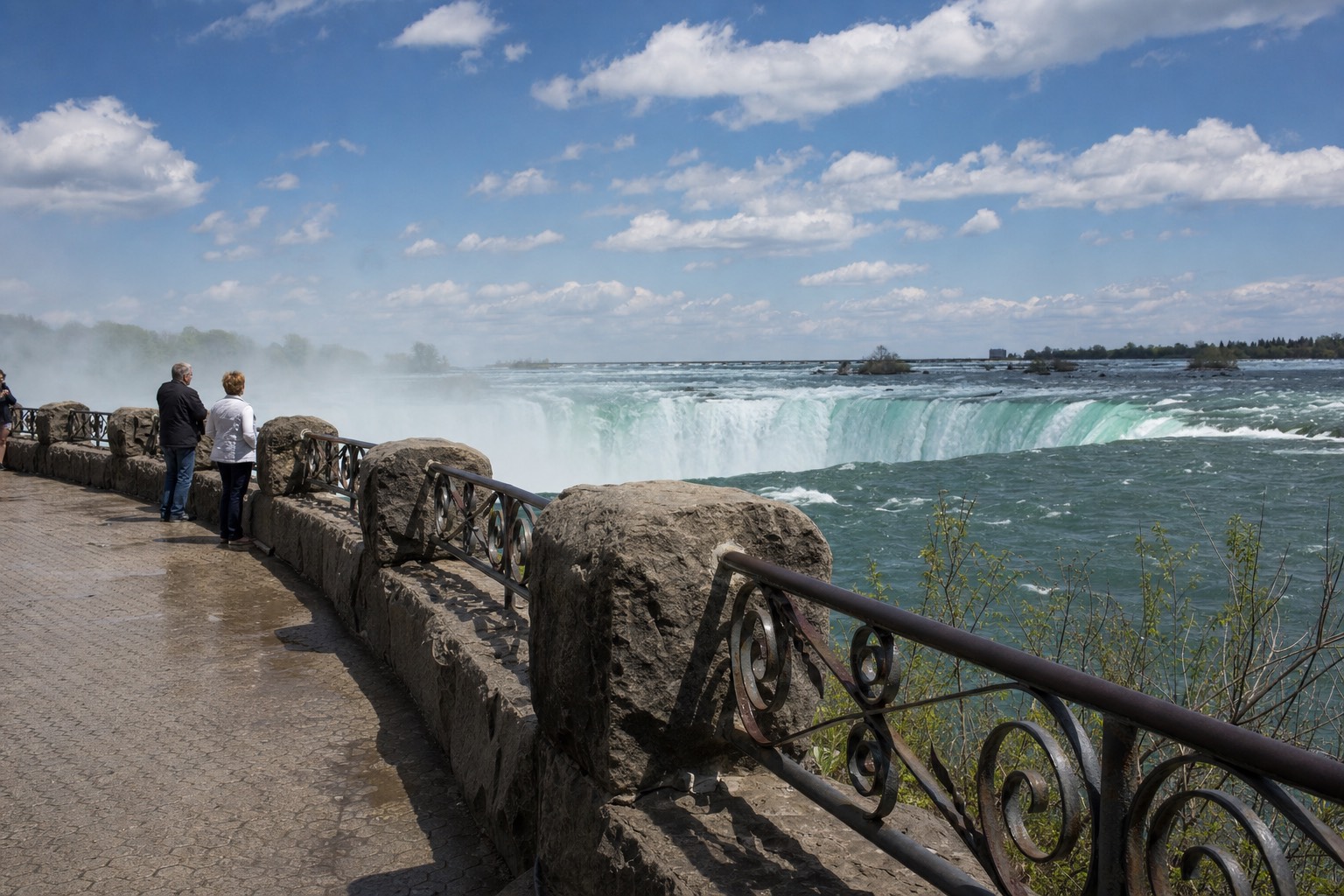
The boats themselves rarely sell out; the good versions of the day do. First sailings, timed morning windows and the well-reviewed guided tours are what disappear, and how early they go is a function of the month. Free cancellation makes booking early a one-way bet in every case.
| When you are going | Book the tour/slot | The reasoning |
|---|---|---|
| July or August weekend | As soon as dates are fixed, weeks out | Peak demand meets fixed capacity; the morning slots go first and the mornings are the whole strategy |
| June or September weekday | A week or two ahead | Comfortable, but the best windows still thin out |
| May or October | Days ahead | The month itself is the queue-beater; booking is about locking the morning |
| April or November edges | Book early AND loosely | Availability is easy; the season edge is the risk, so hold a refundable slot and watch the operator's page |
| Winter months | Whenever | You are booking the substitution itinerary knowingly; demand is a non-issue |
The logic underneath the table: capacity at the falls is enormous but not elastic, and it is front-loaded. Every tactic this site recommends concentrates demand into the first two hours of the day, which means the early inventory is the scarce inventory even in months when the attraction as a whole is quiet. Booking late does not usually cost you the boat; it costs you the 9am boat, which costs you the plan.
The free-cancellation terms on the featured listings, typically to 24 hours before, convert all of this into a simple rule with no downside: book the moment your dates exist, hold the best slot, and let go of it only if the plan itself changes. The listing shows the exact terms for your date before you pay, and the cost guide covers what the price does and does not include. Between a refundable booking and the month scorecard above, the timing question this page answers is fully solved at the planning stage, which is where solutions are cheap.
Which month would the locals pick?
September, with almost no argument. Ask the people who work the falls year-round and the answer clusters tightly: September for the water and the light, May for the flow, October for the quiet. Nobody who works there picks July, and everybody understands why visitors do.
| Who is choosing | The pick | The tell |
|---|---|---|
| Working guides | September | Warm water, thin queues, golden transit light |
| Photographers | October | Low sun all day, autumn colour in the gorge |
| Families with school-age children | July and August | The calendar picks, not the family |
| Crowd-averse travellers | Early May | Peak flow, pre-season quiet |
| Winter romantics | February | The ice, accepted knowingly, no boat |
| Honeymooners on flexible dates | September again | Every reason above at once |
The July row deserves its defence: school holidays are a real constraint, not a planning failure, and a July visit run on this site's playbook, first sailing, tickets bought the night before, midday spent off the queues, is a genuinely good day. The gap between months at Niagara is smaller than the gap between a planned visit and an improvised one in the same month. Month choice is the last refinement, not the foundation; the foundation is the queue playbook and a refundable booking made the moment your dates exist.
Month and season questions
What is the best month to see Niagara Falls?
September, with May and early October close behind. Those months combine running boats, comfortable weather and far shorter queues than July or August. The falls look the same in every month; the difference is entirely in crowds and what is open.
What is the busiest time at Niagara Falls?
Midday in July and August, when school holidays and coach tours overlap. That is when hour-plus queues across ticketing, the elevator and boarding are routinely reported on both sides.
Which months are the Niagara Falls boats closed?
December through March in full, plus most of April and the tail end of November. The exact dates move slightly each year because they follow removal of the Lake Erie ice boom.
Is Niagara Falls worth visiting in winter?
Yes, as a different trip. Ice forms at the edges of the falls, the crowds nearly vanish and the illumination looks its best. You lose the boat on both sides and Cave of the Winds on the American side, so the Canadian bank is the better choice in the cold months.
What is the cheapest month to go to Niagara Falls?
January through March, when hotel rates on both sides are at their lowest. The boat fares themselves never change by month. For a cheap trip that still includes the boat, aim at early May or October instead.
Does the water flow change through the year?
Yes. Flow is highest in spring as snowmelt comes down the Great Lakes system, and diversion for hydroelectric generation is greater outside peak tourist hours and the summer season. Visitors rarely notice the difference, but May and June do put visibly more water over the crestline than a quiet October evening.
Choose your Niagara day
General editorial starting point; confirm dates, route and personal requirements.
Canadian walking tour: boat, Journey & Skylon
Have a travel date in mind? Check this itinerary before arranging separate admissions. Journey Behind the Falls, Skylon Tower and a seasonal Niagara City Cruises ride in one walking itinerary.
About 3 hours 15 minutes plus check-in. Choose the Niagara Falls, Canada walking option. Meet inside Skylon Tower, 5200 Robinson Street, at the See Sight check-in. English. Guided portion ends at boat boarding; no return transfer. Winter boat replacement is Niagara Takes Flight, which excludes infants and children under 100 cm. Confirm exact seasonal itinerary and access needs.
Choose a date to see Viator scheduled departures. Final availability and price are confirmed on Viator.
Choose only the details that matter. Unanswered fields keep this general guidance; a choice can rule out a package.
| Canadian walking tour: boat, Journey & Skylon | Journey Behind the Falls, Skylon Tower and a seasonal Niagara City Cruises ride in one walking itinerary. About 3 hours 15 minutes plus check-in. Choose the Niagara Falls, Canada walking option. Meet inside Skylon Tower, 5200 Robinson Street, at the See Sight check-in. English. Guided portion ends at boat boarding; no return transfer. Winter boat replacement is Niagara Takes Flight, which excludes infants and children under 100 cm. Confirm exact seasonal itinerary and access needs. |
|---|---|
| USA boat, Cave & hotel pickup | Maid of the Mist, Cave of the Winds and the Observation Tower in one guided American-side itinerary. About 4 hours, plus pickup up to an hour before. Pickup in Niagara Falls, NY, not Buffalo or NYC. English; shared tour. Boat and Cave operations are seasonal; winter substitutes differ. Food is extra. Confirm access needs with the operator. |
| Both sides with boat, Cave & Skylon | American-side boat and Cave stops plus Skylon Tower views in Canada. About 6 hours, plus pickup and border delays; reserve a full day. Niagara Falls ON/NY hotel pickup. English; shared tour. Appropriate entry documents for both countries required. Reconfirm with Over the Falls at least 24 hours ahead. Vehicles cannot accommodate occupied wheelchairs; assisted transfer and collapsible chairs need advance arrangement. Seasonal substitutions; food extra. |
Compare your own group totals
Use the same currency and the same party. Include admissions, transport, parking and taxes in the DIY total. Quotes are your inputs, not prices supplied here.
Enter both totals to compare the cost of the guided itinerary with your independent plan.