How long is the Niagara boat ride?
Everyone quotes twenty minutes. Almost nobody budgets for the other ninety.
 Written with Michael Thompson, Niagara Falls boat tour specialist and local guide
Short answer
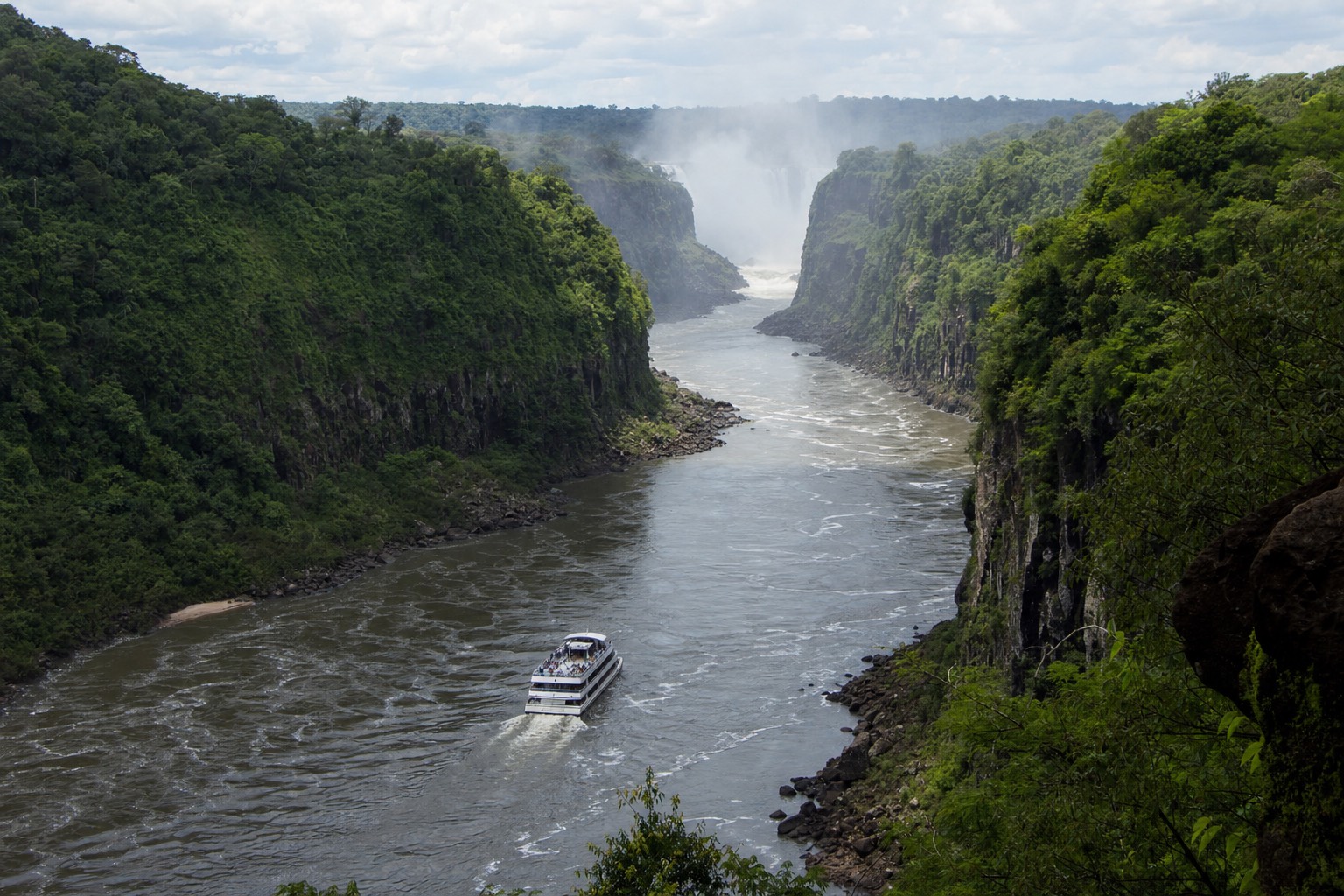
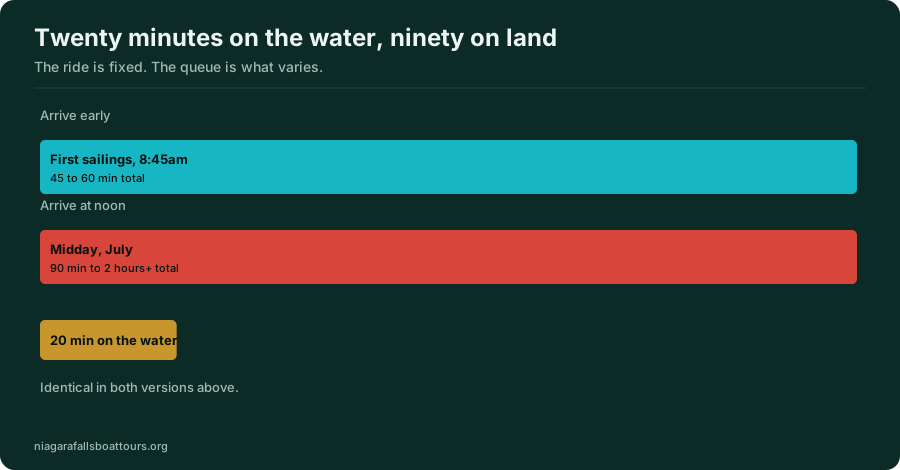
Both boats run about twenty minutes on the water. Budget ninety minutes to two hours in total during summer, because ticketing, the elevator down to the landing and boarding routinely take longer than the cruise itself.
The number every page repeats is twenty minutes, and it is correct. It is also the least useful figure for planning a day, because it describes the part of the experience you spend the least effort getting to.
A guided package is useful when you want the surrounding attractions and logistics as well as a boat ride; it is a different purchase from a boat-only ticket.
Booking choice. Maid of the Mist, Cave of the Winds and the Observation Tower in one guided American-side itinerary. Explore USA boat, Cave & hotel pickup
How long is the Niagara Falls boat ride?
About twenty minutes on the water, on both boats. Maid of the Mist from New York and Niagara City Cruises from Ontario run near-identical timings. The genuinely memorable stretch, inside the Horseshoe Falls basin, is roughly four to five minutes of that.
The operators are straight about this. Niagara City Cruises markets its trip explicitly as the twenty-minute Voyage to the Falls, and Maid of the Mist runs to a comparable schedule on the New York side. Nobody is padding the figure.
What the twenty minutes contains is roughly this:
| Stage of the ride | Roughly | What is happening |
|---|---|---|
| Leaving the landing | 2 minutes | Boarding completes, the boat pulls into the gorge |
| Transit up the gorge | 5 minutes | Gorge walls, the Rainbow Bridge overhead |
| Past the American Falls | 3 minutes | Broadside on from New York, further off from Ontario |
| Approaching the Horseshoe | 3 minutes | Spray starts, ponchos go up, phones go away |
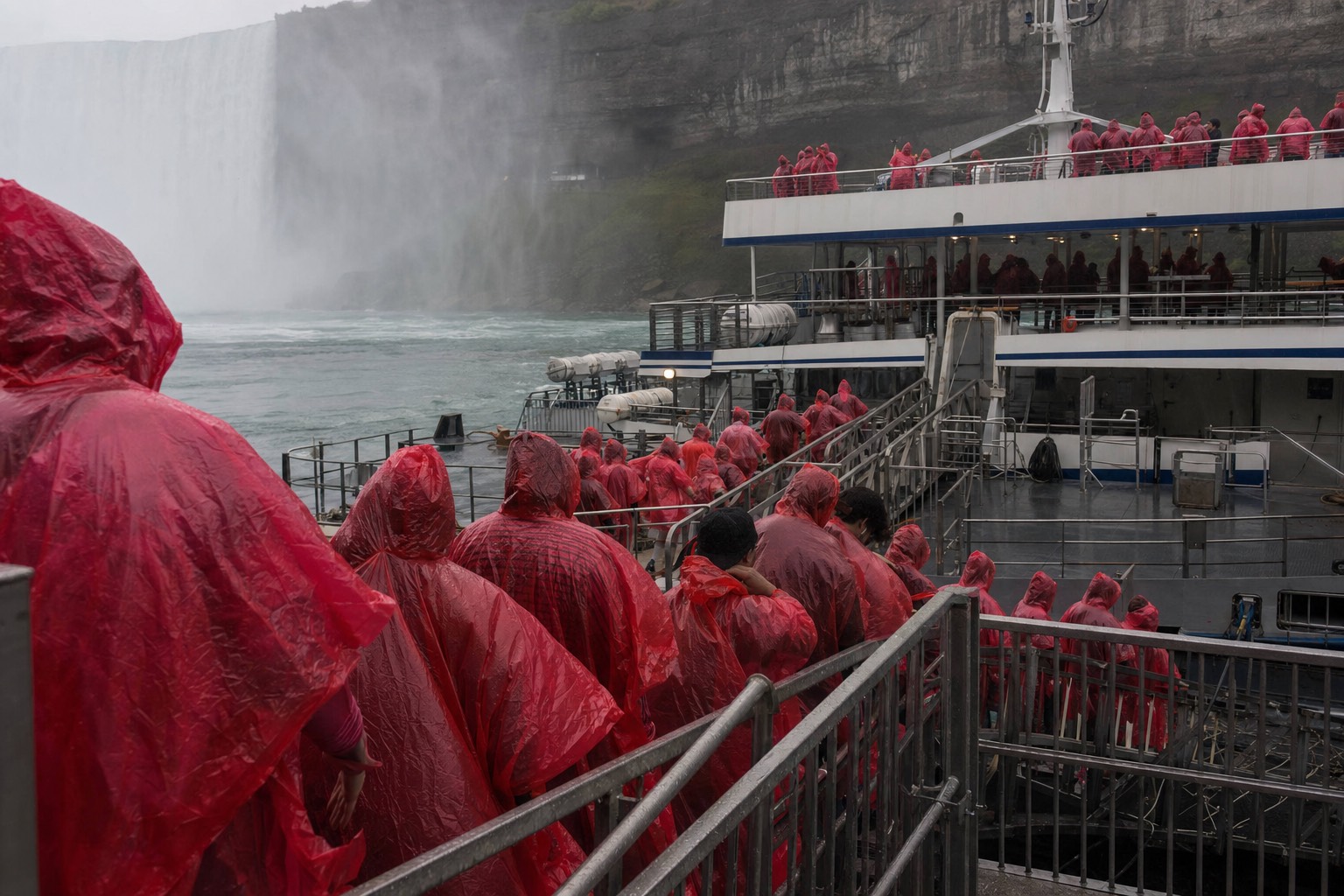
| Inside the basin | 4 to 5 minutes | The reason you booked. Loud, blind, soaking |
| Return to the landing | 3 minutes | Everyone dripping, mostly quiet |
How long does the whole visit take?
Ninety minutes to two hours in summer, and about forty-five minutes in shoulder season. The variable is not the boat, it is the three queues before it: buying a ticket, taking the elevator down to the landing, and waiting to board.
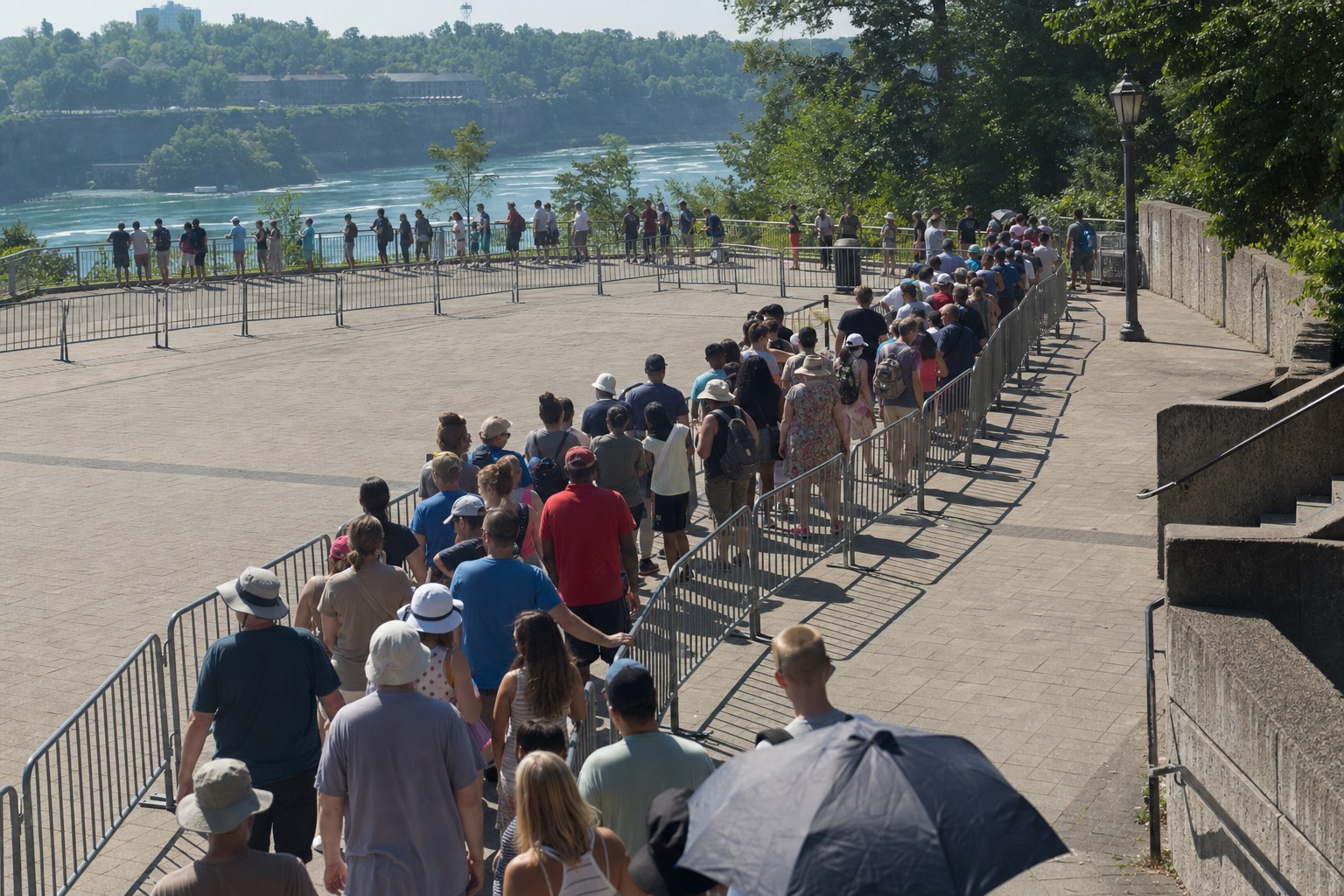
Peak-season reports of an hour or more of queueing at midday in June, July and August are consistent across Tripadvisor and Reddit. That is not one line, it is three stacked.
| When you go | Realistic door to door | What dominates |
|---|---|---|
| First sailings, around 8:45 to 9am | 45 to 60 minutes | Almost nothing; you walk on |
| Mid-morning, May or October | About an hour | Short boarding queue |
| Midday, July or August | 90 minutes to 2 hours+ | Ticket line, then elevator, then boarding |
| Late afternoon, any season | 60 to 75 minutes | Coach groups have moved on |
| Evening, Canadian side in season | About an hour | Smaller crowds, illuminated falls |
The single most effective change you can make to that table is the time you arrive. Riding the first sailings turns a two-hour commitment into a forty-five-minute one, and it costs nothing.
Does timed entry make it faster?
On the Canadian side, yes, meaningfully. Niagara City Cruises uses timed slots and sails roughly every fifteen minutes inside them, so arriving at the start of your window usually means the next boat out. The American side runs a general queue instead.
Use the slot properly. People book a window and then turn up in the middle of it, which puts them behind everyone who arrived at the start. Get there as your window opens and the fifteen-minute sailing cycle works in your favour.
If you would rather have the ticketing step done before you arrive at all, the Voyage to the Falls on its own is the simplest booking on the Ontario bank, and our Canadian-side page explains how the landing and the elevator work.
How long should you allow for the boat plus everything else?
Half a day per side, not an hour. The boat with its queue is roughly two hours at peak, and the paired attraction on each bank adds another one to two hours on top.
| Plan | Allow | Notes |
|---|---|---|
| Boat only, off-peak | 1 hour | Feasible as a stop rather than a plan |
| Boat only, peak | 2 hours | The queue, not the ride |
| Boat plus Cave of the Winds (New York) | 3 to 4 hours | Do the boat first; the Hurricane Deck soaks you harder |
| Boat plus Journey Behind the Falls (Ontario) | 3 hours | Both are close to the same landing |
| Both sides in one day | Full day | Add the Rainbow Bridge crossing and border queue in both directions |
| Day trip from Toronto | Full day | Roughly 90 minutes each way plus the falls |
Both-sides days are the ones people underestimate most, because the border crossing is an unknown quantity that can add anything from ten minutes to an hour. That is one reason the guided both-sides itineraries exist: the crossing and the admissions are handled, and the day is built around the queue rather than surprised by it.
What actually determines how long you wait?
Three stacked queues, and they behave differently. The ticket line is longest at midday. The elevator is the fixed bottleneck, because a gorge landing can only be fed so fast. The boarding queue moves in pulses, one boatload at a time. Beating any one of them does not beat the other two.
Understanding the machinery is what makes the fixes obvious rather than superstitious.
| Queue | What controls it | When it is worst | What actually beats it |
|---|---|---|---|
| Tickets | Staffed windows and walk-up volume | 11am to 2pm | Buying online before you arrive |
| The elevator down | Fixed cabin capacity per hour | Whenever the plaza is full | Nothing; you can only arrive before the plaza fills |
| Boarding | One boatload per sailing cycle | Peak afternoons | Timed slots (Canada) or first sailings (both) |
| The way back up | Same elevator, in reverse | Just after busy sailings land | Linger on the lower boardwalk and let the surge clear |
The elevator point is the one nobody plans for. Both landings sit at the bottom of the gorge and everything that reaches the boat goes down a shaft to get there. When people describe a two-hour visit, most of the dead time was standing in a plaza waiting for a lift cabin, not waiting for a boat. That is also why a ticket in hand does not make the queue disappear: it removes one line of three.
The coach-group wave is the other invisible mechanic. Group tours arrive mid-morning, batch after batch, and the plaza fills in surges rather than steadily. Arriving before the first wave is worth more than any other single decision, which is the whole case for the first sailings.
Do the two sides take different amounts of time?
Door to door, the Canadian side is more predictable and the American side has the higher ceiling and the lower floor. Timed slots in Ontario compress the spread; the free-running American queue is faster than Canada on a quiet morning and slower on a packed afternoon.
| Stage | American side | Canadian side |
|---|---|---|
| Ticket to landing | Observation Tower elevator, general queue | Plaza elevator, entry governed by your slot |
| Queue behaviour | First come, first served all day | Timed windows, boats every ~15 min inside them |
| Quiet morning | Walk on in minutes | Bound to your slot even if it is empty |
| Peak afternoon | The hour-plus reports live here | Slot caps the damage; you still queue inside it |
| After the ride | Elevator back up, then the park | Elevator up to Clifton Hill directly |
That table is the fairest way to answer "which side is faster", because the honest answer is "when?". If you are an early riser visiting in June, the American boat's open queue rewards you. If you are arriving at 1pm in August, the Canadian timed slot is damage control worth paying for. Our comparison page folds this into the full side-by-side.
How does the boat's length compare with everything else you might do?
It is the shortest headline attraction at the falls, which is exactly why it fits any itinerary. As planning allowances: the boat is a two-hour block at peak, Cave of the Winds and Journey Behind the Falls are one-to-two-hour blocks, and the jet boat is a half day once transport is counted.
These are planning allowances rather than operator-stated durations, and they assume summer queues; shoulder-season visits run faster.
| Experience | Time on the thing itself | Realistic block at peak | Where the time goes |
|---|---|---|---|
| The boat, either side | ~20 min | Up to 2 hours | Three queues and an elevator |
| Cave of the Winds | Self-paced on the walkways | 1 to 2 hours | Queue for the elevator, then as long as you like on the decks |
| Journey Behind the Falls | Self-paced in the tunnels | About 1 hour | Entry queue, then the portals are yours |
| Whirlpool jet boat | ~45 min on the water | Half a day | Getting to Lewiston or Queenston and back, safety briefing |
| Observation Tower | As long as you like | Under an hour | Minimal queueing outside peak |
| The promenade viewpoints | As long as you like | However long you give it | None; this is the free layer |
The jet boat line deserves its caveat repeated: it is 45 minutes of rapids on the lower river, brilliant and completely unrelated to seeing the falls up close. People who trade the falls boat for it because "it is longer for similar money" are optimising the wrong variable. The full comparison is on its own page.
How much time does a both-sides day really need?
A genuinely full day: nine to ten hours including the border in each direction. The ride is twenty minutes; it is everything wrapped around two countries' worth of queues that consumes the rest.
The arithmetic, using the same peak-season allowances as above: two hours for the first boat block, ninety minutes for the paired attraction beside it, an hour for lunch, the Rainbow Bridge crossing with border formalities in each direction, then the second side's attraction block, and the promenade viewpoints you crossed for in the first place. None of those line items is optional on the day people actually want, and the border is the wildcard that can swing an hour either way.
That is the practical case for doing it as one guided booking rather than four separate tickets and a bridge: the both-sides day tour runs this exact day with the crossings, admissions and sequencing handled, which converts the wildcards into someone else's problem. It is also why we tell people with only three hours to pick one side and do it well rather than sprint both badly; our worth-it guide makes that case in full.
How early should you actually arrive?
For the first sailings: twenty minutes before opening on the American side, and at the start of your first window on the Canadian side. For any other time of day: earlier than feels reasonable, because the queue you can see from the entrance is only one of the three.
Precision matters more here than enthusiasm. Arriving forty-five minutes before the American boat opens buys you almost nothing over twenty, because the gates are the gates; arriving twenty minutes after opening on a July Saturday can already put two boatloads of people ahead of you. The window is asymmetric, and the penalty for late is much larger than the reward for absurdly early.
| Your plan | Arrive | Why |
|---|---|---|
| First American sailing | ~20 min before opening | Ahead of the gates, pointless earlier |
| First Canadian window | At the window's start | Slots make earlier arrival worthless |
| Mid-morning, either side | 30 to 40 min of slack | The coach wave lands behind or on top of you |
| Afternoon, either side | Whatever the queue shows, plus the elevator | The visible line understates the total |
| Last sailings | 45 min before the posted last boat | Cutting this fine risks the day's only hard deadline |
The last-sailing row is the one that catches people. Operators post a final departure and the queue closes ahead of it; turning up at the posted time is turning up late. Everything else at Niagara degrades gracefully when you mistime it. This one does not.
One more asymmetry worth knowing: mornings degrade slower than afternoons. A 9:30 arrival on a busy day is still a decent queue; a 3:30 arrival on the same day is a gamble on how fast the plaza clears. When in doubt, shift the boat earlier and push everything else later, never the reverse. Our queue guide turns all of this into a single plan.
Timing with kids, strollers and mobility needs
Add a third to every allowance and drop the stroller if you can. Both landings are elevator-fed and step-free, so the route works for wheelchairs and pushchairs; what costs time is the compression at boarding, which is exactly where small children and mobility devices need slack.
The infrastructure itself is genuinely good. Both operators run elevators and ramps to the water, Maid of the Mist states the experience is ADA accessible with wheelchairs allowed aboard, and Niagara City Cruises runs ramps, elevators and designated seating with a limited number of loaner wheelchairs on site. None of that is the problem. The problem is that boarding happens in a pulse, a few hundred people funnelling onto a vessel in a few minutes, and that pulse is the worst moment of the day to be folding a stroller or transferring from a chair.
The timing fixes are the same ones, applied harder. First sailings are worth even more to families than to everyone else, because the boarding pulse is smallest. The Canadian timed slot helps a wheelchair user more than the American open queue, because arrival can be planned to the minute. And the lower boardwalk after the ride is the pressure release: let the disembarking surge take the elevator, sit in the spray for ten minutes, ride up empty. The full detail, including each boat's policies for small children, is in our kids guide and the accessibility guide.
Is twenty minutes enough?
Long enough to be worth doing, short enough to annoy people who expected a cruise. If you want more time on the water at Niagara, the boat is not the product to stretch; the Whirlpool jet boats run about forty-five minutes downriver, though they never go near the falls. And if the queue is your real concern, our guide to beating it is more useful than any change of boat.
Timing questions
How long does the Maid of the Mist boat ride last?
About twenty minutes on the water. Allow ninety minutes to two hours in total during summer, because the ticket line, the elevator down from the Observation Tower and the boarding queue routinely take longer than the ride.
How long is the Voyage to the Falls boat tour?
About twenty minutes, the same as the American boat. Niagara City Cruises uses timed entry and sails roughly every fifteen minutes within your booked slot, so total time on site depends mainly on when in the window you arrive.
How long is the wait for the Maid of the Mist?
Minimal at the first sailings around 8:45 to 9am. At midday in July and August, visitors routinely report an hour or more across three separate queues: buying tickets, the elevator to the landing, and boarding.
How long do you need at Niagara Falls overall?
Half a day for one side done properly, meaning the boat plus that bank's paired attraction. A full day if you want both sides, because the Rainbow Bridge crossing and a second set of admissions have to fit in.
Is the boat ride longer on the Canadian side?
No. Both are about twenty minutes. The Canadian landing sits nearer the Horseshoe crestline so the approach feels shorter, while the American boat spends longer transiting up the gorge past the American Falls. Total time on the water is comparable.
How often do the boats sail?
Frequently through the operating day in season. Niagara City Cruises states boats leave roughly every fifteen minutes inside a booked slot. The American boat runs a continuous general queue rather than timed entry.
Choose your Niagara day
General editorial starting point; confirm dates, route and personal requirements.
USA boat, Cave & hotel pickup
Have a travel date in mind? Check this itinerary before arranging separate admissions. Maid of the Mist, Cave of the Winds and the Observation Tower in one guided American-side itinerary.
About 4 hours, plus pickup up to an hour before. Pickup in Niagara Falls, NY, not Buffalo or NYC. English; shared tour. Boat and Cave operations are seasonal; winter substitutes differ. Food is extra. Confirm access needs with the operator.
Choose a date to see Viator scheduled departures. Final availability and price are confirmed on Viator.
Choose only the details that matter. Unanswered fields keep this general guidance; a choice can rule out a package.
| USA boat, Cave & hotel pickup | Maid of the Mist, Cave of the Winds and the Observation Tower in one guided American-side itinerary. About 4 hours, plus pickup up to an hour before. Pickup in Niagara Falls, NY, not Buffalo or NYC. English; shared tour. Boat and Cave operations are seasonal; winter substitutes differ. Food is extra. Confirm access needs with the operator. |
|---|---|
| Canadian walking tour: boat, Journey & Skylon | Journey Behind the Falls, Skylon Tower and a seasonal Niagara City Cruises ride in one walking itinerary. About 3 hours 15 minutes plus check-in. Choose the Niagara Falls, Canada walking option. Meet inside Skylon Tower, 5200 Robinson Street, at the See Sight check-in. English. Guided portion ends at boat boarding; no return transfer. Winter boat replacement is Niagara Takes Flight, which excludes infants and children under 100 cm. Confirm exact seasonal itinerary and access needs. |
| Both sides with boat, Cave & Skylon | American-side boat and Cave stops plus Skylon Tower views in Canada. About 6 hours, plus pickup and border delays; reserve a full day. Niagara Falls ON/NY hotel pickup. English; shared tour. Appropriate entry documents for both countries required. Reconfirm with Over the Falls at least 24 hours ahead. Vehicles cannot accommodate occupied wheelchairs; assisted transfer and collapsible chairs need advance arrangement. Seasonal substitutions; food extra. |
Compare your own group totals
Use the same currency and the same party. Include admissions, transport, parking and taxes in the DIY total. Quotes are your inputs, not prices supplied here.
Enter both totals to compare the cost of the guided itinerary with your independent plan.