How to beat the Niagara boat queue
There is no skip-the-line ticket for either boat. There is a time of day.
 Written with Michael Thompson, Niagara Falls boat tour specialist and local guide
Short answer
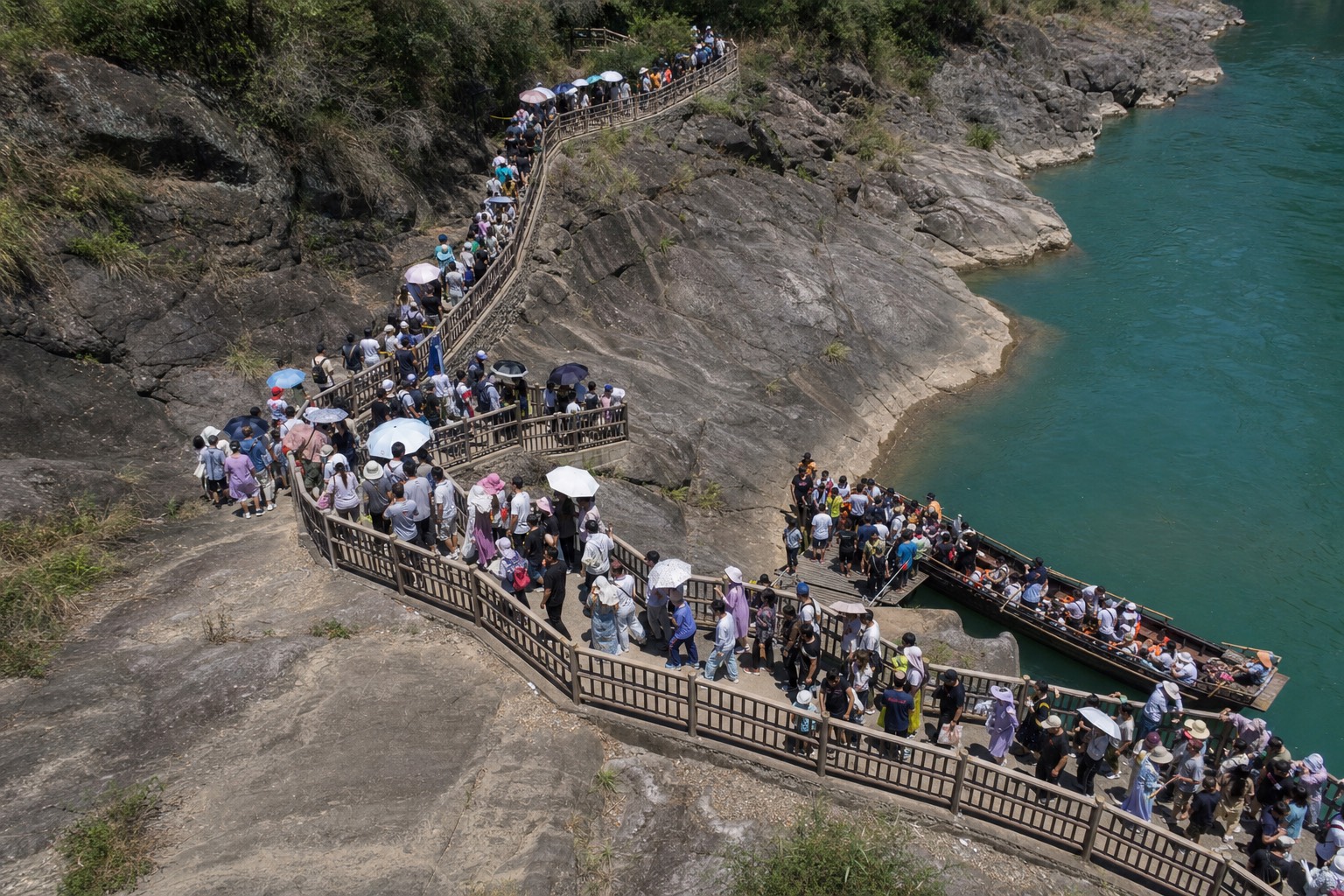
Ride the first sailings, around 8:45 to 9am. That single change turns a two-hour visit into forty-five minutes. Neither operator sells a genuine skip-the-line ticket, because the bottleneck is the boarding queue at the landing, which no ticket type bypasses.
The most common complaint about both Niagara boats is not the ride, the price or the soaking. It is that people queued longer than they sailed. That is entirely avoidable, and the fix costs nothing.
A guided package is useful when you want the surrounding attractions and logistics as well as a boat ride; it is a different purchase from a boat-only ticket.
Booking choice. Maid of the Mist, Cave of the Winds and the Observation Tower in one guided American-side itinerary. Explore USA boat, Cave & hotel pickup
Why is the queue so long?
Because it is three queues, not one. You wait to buy a ticket, then wait for the elevator down to the landing, then wait to board. Each is short in isolation. Stacked at midday in July they routinely add up to an hour or more.
Understanding the structure matters, because most of the tactics people try only address the first of the three.
| Queue | What causes it | Can you avoid it? |
|---|---|---|
| Buying a ticket | Everyone arriving at once mid-morning | Yes, buy online or book a tour |
| The elevator to the landing | Fixed lift capacity, both sides | No |
| Boarding the boat | Boat capacity and turnaround time | No |
| The Rainbow Bridge, if crossing | Border processing | Partly, by crossing early |
| Parking before any of it | Lot capacity in summer | Yes, arrive early or take a tour with transfers |
Niagara draws over twenty million visitors a year across both sides, and they are not spread evenly across the calendar or the clock. The pressure is concentrated into ten summer weeks and, within each day, into the four hours either side of noon.
What time should you arrive?
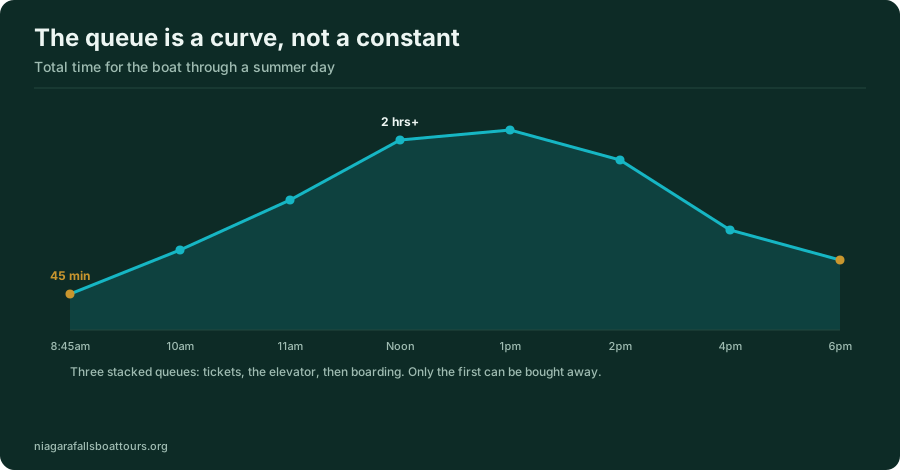
For the first sailings, around 8:45 to 9am. This is the single most effective change available and it is repeated consistently in recent visitor accounts on both sides. Late afternoon is the second-best window, once coach groups have moved on.
| When you arrive | Realistic total time | Why |
|---|---|---|
| First sailings, 8:45 to 9am | 45 to 60 minutes | You walk on; nothing has stacked up yet |
| 10am to 11am | 60 to 90 minutes | Coach arrivals begin |
| Midday to 3pm, July or August | 90 minutes to 2 hours+ | All three queues at maximum |
| 4pm to 6pm | 60 to 75 minutes | Coach groups gone, day-trippers leaving |
| Evening, Canadian side in season | About an hour | Smaller crowds, falls illuminated |
| Any time in May or October | Under an hour | The crowd simply is not there |
The people who report the worst experiences arrive between eleven and two, in July, without a ticket. The people who report the best arrive before nine. That is nearly the whole of it.
Is there a skip-the-line ticket for the Niagara boats?
No, and be sceptical of anything sold as one. Neither operator offers a boarding-queue bypass. What exists is timed entry on the Canadian side and prepurchased tickets on both, and those remove the ticket queue rather than the boarding queue.
This is worth being blunt about because a lot of resale traffic goes to pages implying otherwise. The bottleneck at both landings is boat capacity and elevator capacity, and no ticket class changes either.
What does genuinely help:
Timed entry on the Canadian side. Niagara City Cruises sails roughly every fifteen minutes inside a booked window. Arrive as your window opens and you are usually on the next boat. Arrive mid-window and you are behind everyone who came in at the start. Our Canadian ticket guide covers how to use a slot properly.
Prepurchasing on the American side. It removes the ticket line and, per the operator, an online ticket stays valid on any open day rather than being tied to one date. Details in our Maid of the Mist ticket guide.
Booking a guided tour. The ticketing step is done before you arrive, and if the tour includes transfers you skip the parking problem too. The boat with Cave of the Winds is the cleanest example on the New York side, holding 4.6 across 698 GetYourGuide reviews.
What does not work?
Turning up "just before closing", assuming rain will clear the crowds, or hoping a combination pass moves you forward. None of those reliably help, and the first can leave you at a landing that has stopped boarding.
| Tactic | Does it work? | Why |
|---|---|---|
| Arrive at first sailings | Yes, reliably | Nothing has stacked up |
| Book a timed slot, Canadian side | Yes | Boats sail every 15 minutes inside it |
| Buy the ticket online in advance | Partly | Removes one queue of three |
| Book a guided tour | Partly, plus parking | Ticketing handled before arrival |
| Turn up in the rain | Slightly | Crowds thin, but you were getting wet anyway |
| Arrive just before closing | Risky | Boarding can stop before the posted close |
| Buy a combination pass | No | It is a bundle, not a fast track |
| Ask about a "VIP" boarding option | No | Neither operator sells one |
The rain point is worth expanding, because it is half true. Wet weather does thin the crowd. It does not change the ride, since you are soaked either way. If your only free day is rainy, that is a reason to go, not a reason to reschedule. High winds are the exception: both operators can cancel sailings for safety without notice.
Does the Canadian side queue less than the American?
Marginally, and for a mechanical reason rather than a popularity one. The Canadian catamarans carry up to 700 passengers, so each sailing clears far more of the line than an American boat does, and timed entry spreads arrivals across the day. Niagara Parks sets out how the attraction operates. The trade is that the deck is more crowded once you are on it.
If you are choosing sides on queue grounds alone, that is a thin reason. Our comparison page has the factors that actually should decide it.
The queue-beating plays, ranked by what they actually save
Ranked honestly: the first sailing beats everything, the timed slot beats the open queue, buying online beats the ticket window, a guided tour beats self-organising, and everything else is margin. No single play beats the elevator, because nothing does.
| Play | What it saves at peak | What it costs | Verdict |
|---|---|---|---|
| First sailings, 8:45 to 9am | The bulk of all three queues | Waking up | The only play that wins outright |
| Late-afternoon ride | Most of the boarding crush | Midday flexibility | The second-best hour of the day |
| Canadian timed slot | Caps the spread; every 15 min inside your window | Booking ahead, CA$47.95 fare | The best midday damage control |
| Buying online before arriving | The entire ticket line | Nothing | Free; there is no reason not to |
| Guided tour with ticketing handled | The ticket line plus the figuring-out | The package price | Strongest for both-sides days |
| Shoulder-season dates | The problem itself | Summer weather | May, September, October |
| Standing in line with a sandwich | Nothing, but pleasantly | A sandwich | Underrated |
The row that surprises people is how little the paid options move the elevator, and it bears repeating because it is the honest limit of every plan on this page: both landings are fed by lift cabins with fixed capacity, and once the plaza is full, everyone in it waits their turn regardless of what their ticket cost. Every play above works by arriving before the plaza fills or by capping how many people can share your window, not by jumping the shaft.
Stack the plays rather than choosing one. Online ticket plus first sailing is the whole game on the American side; timed slot at the window's start plus a weekday is the Canadian equivalent. Either stack turns the worst hour of a July day into a non-event, and both cost nothing beyond intent.
A worked example: the two-hour July visit that actually works
Here is the whole playbook applied once, on the worst day of the year for queues: a Saturday in late July, American side, family of four, done by 11am with the wet part of the day complete.
The evening before: tickets bought online, ponchos accepted as fate, one small towel packed, phone pouch found in a drawer. This is ten minutes of preparation and it removes the single longest line of the following day.
| Time | What happens | Why it works |
|---|---|---|
| 8:15 | Into the State Park on foot, car parked outside the peak lot | The parking queue is also a queue |
| 8:40 | At the Observation Tower with tickets on a phone | Ahead of the gates, nothing left to buy |
| 9:00 | Down the elevator with the first wave | The plaza has not filled; the shaft is the bottleneck you beat by being early |
| 9:10 | On the first or second sailing, rail position free choice | The boat is at its emptiest of the entire day |
| 9:40 | Off the boat, ten minutes on the lower boardwalk | Lets the disembark surge take the elevator first |
| 10:00 | Straight to Cave of the Winds, already wet | The pairing trick: two soakings, one drying-out |
| 11:00 | Done, dry-ish, coffee on Old Falls Street | The midday queue is now someone else's morning |
That is the entire method of this page in one column of a table: pay nothing extra, move every fixed decision to the night before, and spend the scarce early hour on the thing with the worst queue-to-minutes ratio at the falls. The same skeleton works on the Canadian side by swapping the online ticket for the first timed window and Cave of the Winds for Journey Behind the Falls.
And if the 8:15 start is simply not your holiday, that is legitimate; book the guided pairing instead, let the operator hold the tickets, and accept the midday crowd as the cost of the lie-in. Both are honest plans; the only dishonest plan is the 11:30 walk-up with no tickets wondering why the internet lied about twenty minutes.
How do you read the queue before you join it?
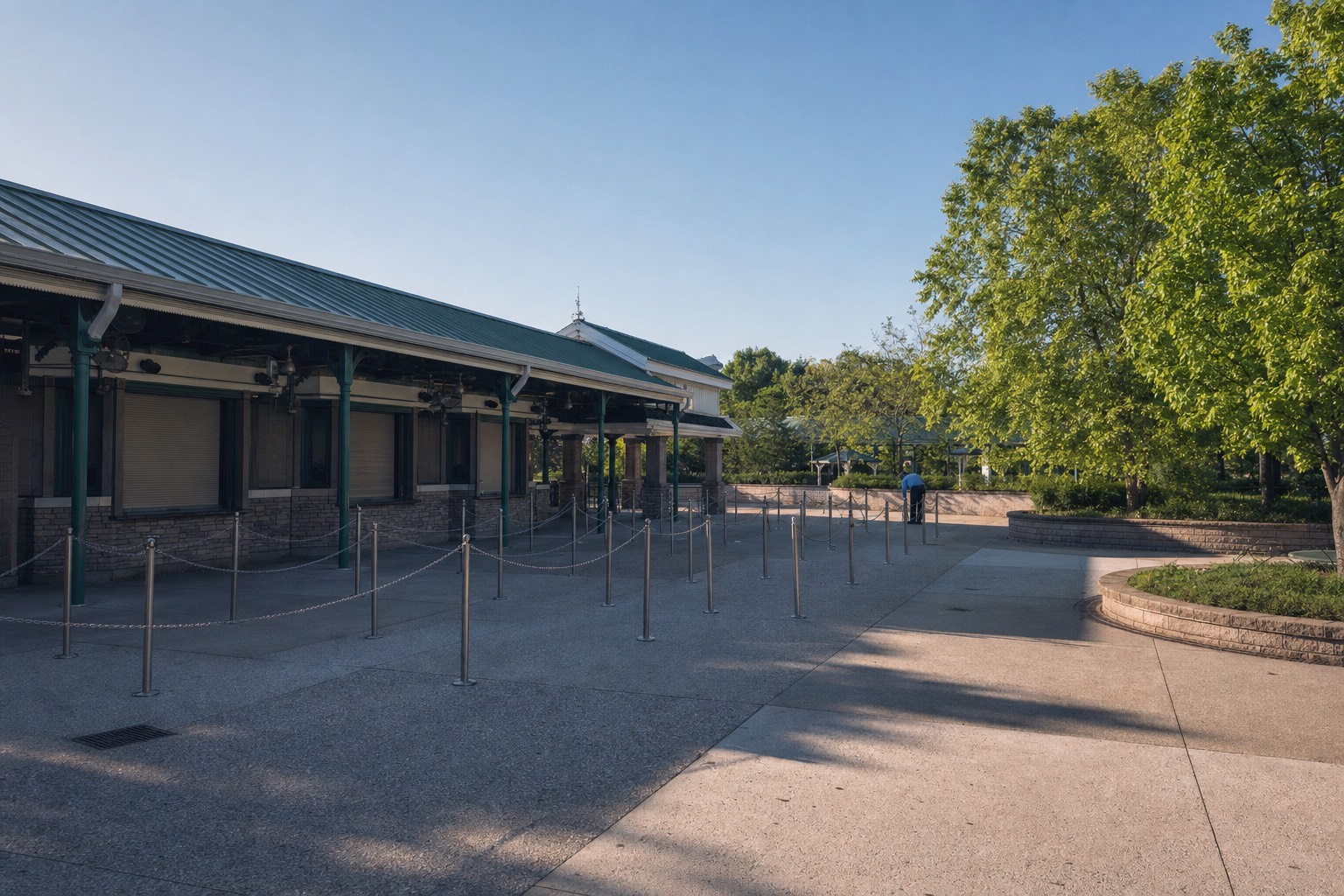
The plaza tells you everything before you commit. Full coach bays, a switchback with no gaps, and a parking lot at capacity mean an hour-plus; empty bays and visible gaps in the line mean you walk on. Learning the three signals takes one glance and can save a rebuilt afternoon.
The queue at either boat is unusually legible if you know where to look, because the bottlenecks are physical and visible.
| Signal | What to look at | What it means |
|---|---|---|
| The coach bays | Tour bus parking near the entrance | Full bays mean the groups are already in the plaza ahead of you |
| The switchback density | Gaps between people in the barriers | A line with gaps moves in minutes; a compressed line is elevator-bound |
| The parking lots | The main lot's state as you pass | A full lot at 10am predicts the noon plaza with grim accuracy |
| The weather turning | A rain shower starting | Ten minutes of rain shortens the queue more than any tactic; the falls do not care |
| Time against last sailing | Posted final departure vs the line ahead | If the maths is tight, the queue closes before the clock says so |
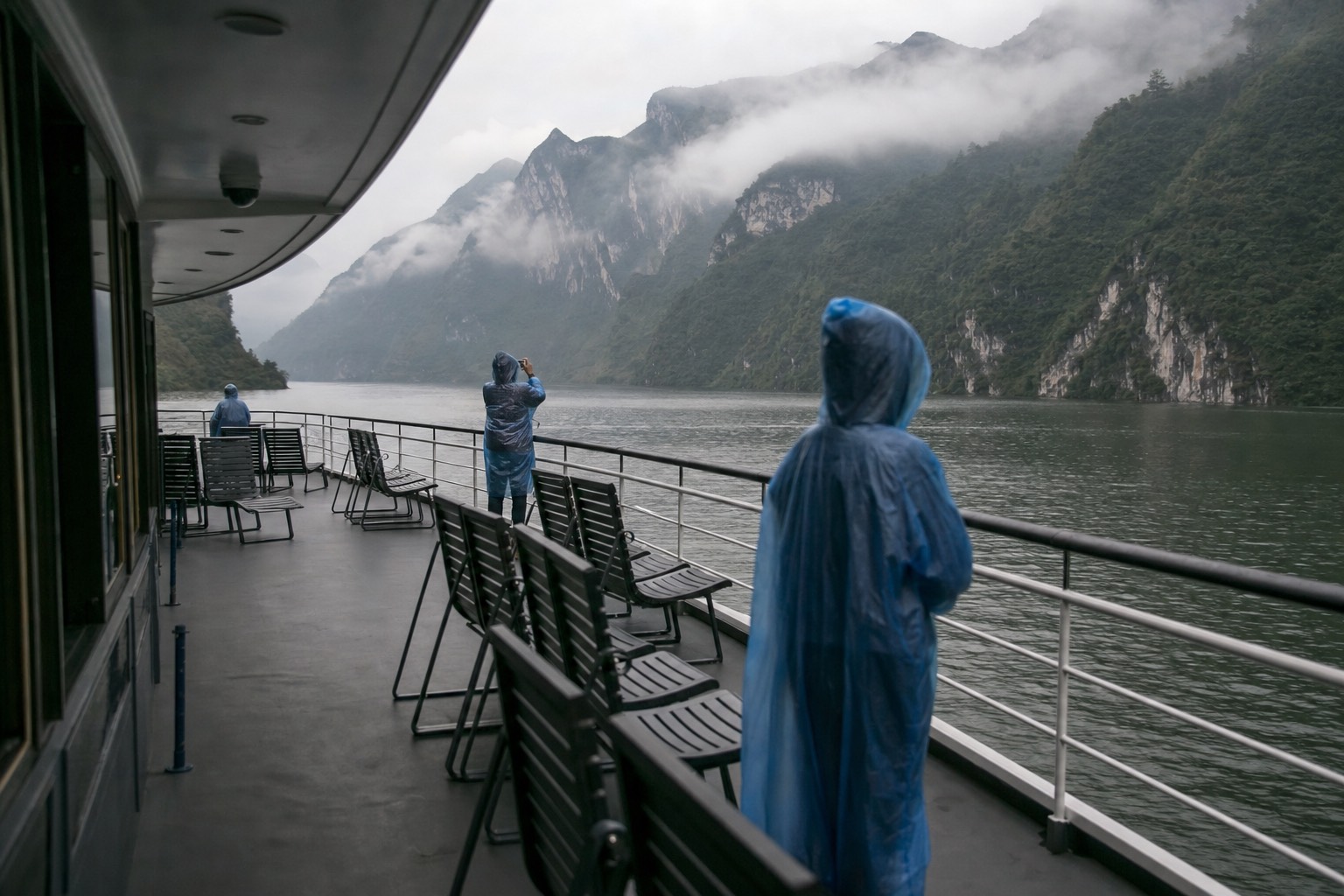
The rain row is the counterintuitive one worth internalising. A passing shower empties the plaza of exactly the visitors who were treating the boat as an item to tick, and the ride itself is identical in rain, as our do-you-get-wet guide argues, arguably better. Locals-in-the-know behaviour at Niagara is walking toward the boat when the drizzle starts, not away from it.
And the bail-out play, for the day the signals all read wrong: flip the plan, not the mood. The promenade, the Observation Tower and lunch do not queue; take them at noon, and come back at 4pm when the plaza has exhaled. The itinerary in the worked example above survives being run in reverse, which is precisely why it is built around the first and last hours rather than the middle.
What do the people who work here actually do?
They ride first sailings on their days off, they treat rain as an invitation, and they never join a queue they cannot see the front of. None of this is secret knowledge; it is just the compounded version of everything above, applied without sentiment.
Michael's own answers to the questions this page keeps getting asked:
| Question he gets | His answer |
|---|---|
| "When would YOU ride?" | First boat, any month with a boat |
| "Is the queue ever worth just standing in?" | At 9am yes, because it is short. At noon, no; flip the day |
| "Does paying more skip the line?" | No ticket skips the elevator; earlier beats richer |
| "Best kept secret?" | Drizzle. The plaza halves and the ride is identical |
| "Biggest mistake you see?" | Arriving at 11 with no tickets and a 2pm deadline |
| "One-sentence version?" | Decide the night before; the queue punishes improvisation |
The pattern underneath every answer is the same: the queue at Niagara is not weather, it is arithmetic. It has inputs, the inputs are visible the evening before, and the visitors who treat it that way spend their morning on the water while the ones who treat it as luck spend it in the plaza. This page exists so you can be in the first group for the price of reading it.
Queue questions
How long is the wait for the Maid of the Mist?
Minimal at the first sailings around 8:45 to 9am. At midday in July and August, visitors routinely report an hour or more spread across the ticket line, the elevator and boarding.
What is the best time of day for the Niagara boat ride?
Early, at the first sailings of the day. Late afternoon is the second-best window, once coach groups have left. The worst window is roughly eleven to two in July and August.
Can you skip the line at Niagara Falls?
Not the boarding line. Neither operator sells a genuine queue bypass, because the constraint is elevator and boat capacity. Buying tickets in advance removes the ticket queue, and a timed slot on the Canadian side spreads arrivals, but everyone boards the same way.
Does booking a tour help with the queue?
It removes the ticketing step and, if transfers are included, the parking problem. It does not bypass boarding. The real advantage of a guided morning is that it usually starts early, which is the thing that actually works.
Is it quieter on a rainy day?
Somewhat. Crowds thin and queues shorten, and since the boat soaks you regardless, rain costs you nothing. High winds are different: both operators can cancel sailings for safety without notice.
Should you buy tickets in advance in shoulder season?
It is less necessary in May, September and October, when the crowd simply is not there and a mid-morning arrival works fine. It is still worth doing on the American side, because an online ticket stays valid on any open day if your plans move.
Choose your Niagara day
General editorial starting point; confirm dates, route and personal requirements.
USA boat, Cave & hotel pickup
Have a travel date in mind? Check this itinerary before arranging separate admissions. Maid of the Mist, Cave of the Winds and the Observation Tower in one guided American-side itinerary.
About 4 hours, plus pickup up to an hour before. Pickup in Niagara Falls, NY, not Buffalo or NYC. English; shared tour. Boat and Cave operations are seasonal; winter substitutes differ. Food is extra. Confirm access needs with the operator.
Choose a date to see Viator scheduled departures. Final availability and price are confirmed on Viator.
Choose only the details that matter. Unanswered fields keep this general guidance; a choice can rule out a package.
| USA boat, Cave & hotel pickup | Maid of the Mist, Cave of the Winds and the Observation Tower in one guided American-side itinerary. About 4 hours, plus pickup up to an hour before. Pickup in Niagara Falls, NY, not Buffalo or NYC. English; shared tour. Boat and Cave operations are seasonal; winter substitutes differ. Food is extra. Confirm access needs with the operator. |
|---|---|
| Canadian walking tour: boat, Journey & Skylon | Journey Behind the Falls, Skylon Tower and a seasonal Niagara City Cruises ride in one walking itinerary. About 3 hours 15 minutes plus check-in. Choose the Niagara Falls, Canada walking option. Meet inside Skylon Tower, 5200 Robinson Street, at the See Sight check-in. English. Guided portion ends at boat boarding; no return transfer. Winter boat replacement is Niagara Takes Flight, which excludes infants and children under 100 cm. Confirm exact seasonal itinerary and access needs. |
| Both sides with boat, Cave & Skylon | American-side boat and Cave stops plus Skylon Tower views in Canada. About 6 hours, plus pickup and border delays; reserve a full day. Niagara Falls ON/NY hotel pickup. English; shared tour. Appropriate entry documents for both countries required. Reconfirm with Over the Falls at least 24 hours ahead. Vehicles cannot accommodate occupied wheelchairs; assisted transfer and collapsible chairs need advance arrangement. Seasonal substitutions; food extra. |
Compare your own group totals
Use the same currency and the same party. Include admissions, transport, parking and taxes in the DIY total. Quotes are your inputs, not prices supplied here.
Enter both totals to compare the cost of the guided itinerary with your independent plan.